


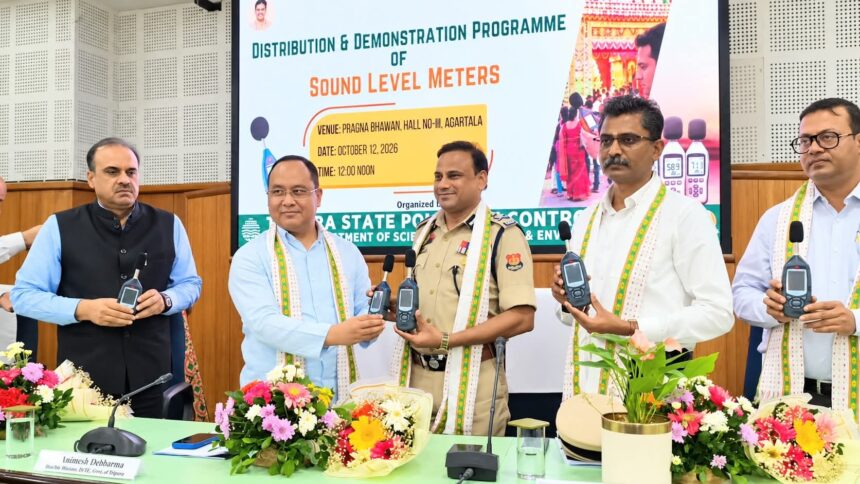
AGARTALA, October 13: Tripura Police have received 35 sound level meters from the Tripura State Pollution Control Board (TSPCB) to strengthen the monitoring of noise pollution and improve enforcement of prescribed noise-control regulations across the state.
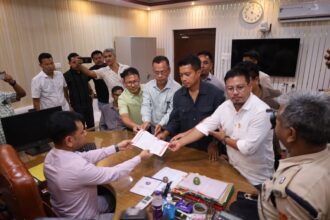
The equipment was formally handed over during a distribution and demonstration programme organised at Hall No. 3 of Pragya Bhavan in Agartala on Monday, October 12. The initiative was jointly undertaken by the Department of Science, Technology and Environment, TSPCB and Tripura Police.
Science, Technology and Environment Minister Animesh Debbarma attended the programme as the chief guest and formally handed over the devices to police authorities. Principal Secretary Shantanu and Inspector General of Police (Law and Order) Manchak Ippar were among the senior officials present at the event.
Other officials attending the programme included TSPCB Chairman Dr K. Sasikumar, departmental Director Mahender Singh and Board Member Secretary Dr Bishu Karmakar.
Focus on scientific monitoring of noise levels
The newly provided instruments will enable police personnel to measure sound levels more systematically and help identify potential violations involving loudspeakers, public address systems and other sources of excessive noise.
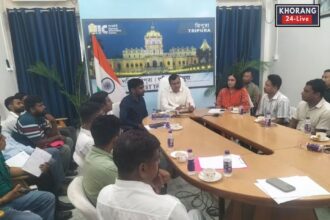
During the programme, officials highlighted the importance of coordination between the pollution control authorities and the police to ensure that applicable environmental regulations are effectively implemented.
Dr K. Sasikumar also delivered a presentation on the legal provisions governing noise pollution, permissible decibel limits and the importance of scientific measurement in monitoring compliance with established standards.
Training for police personnel
The programme also included demonstrations and training to familiarise police personnel with the operation and practical use of the sound level meters.
IGP Manchak Ippar emphasised the importance of effective utilisation of the equipment to maintain public peace during festivals and on ordinary days. Authorities expect the devices to strengthen the police response to noise-related complaints and support enforcement action wherever necessary.
The initiative is intended to improve noise monitoring and promote compliance with the Noise Pollution (Regulation and Control) Rules, 2000, which establish standards for different zones and regulate excessive noise.
With the distribution of these devices, the state has taken another step towards strengthening its noise-control infrastructure and protecting residents from excessive noise exposure.