


Agartala, August 24, 2026: The Indigenous People’s Front of Tripura (IPFT) on Sunday, August 23, once again brought its long-standing demand for Tipraland to the forefront of Tripura’s political discourse, organising a rally and public meeting in Agartala to observe Statehood Demand Day and mark the occasion associated with the Sixth Schedule.
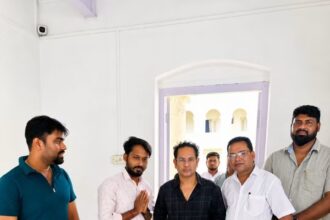
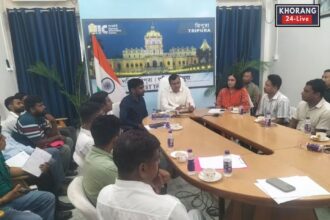
The programme witnessed the participation of IPFT state president Prem Kumar Reang, senior party leader and minister Shukla Charan Noatia, along with party workers and supporters. The rally and subsequent public meeting were aimed at reaffirming the party’s demand for a separate state comprising the areas under the Tripura Tribal Areas Autonomous District Council (TTAADC).
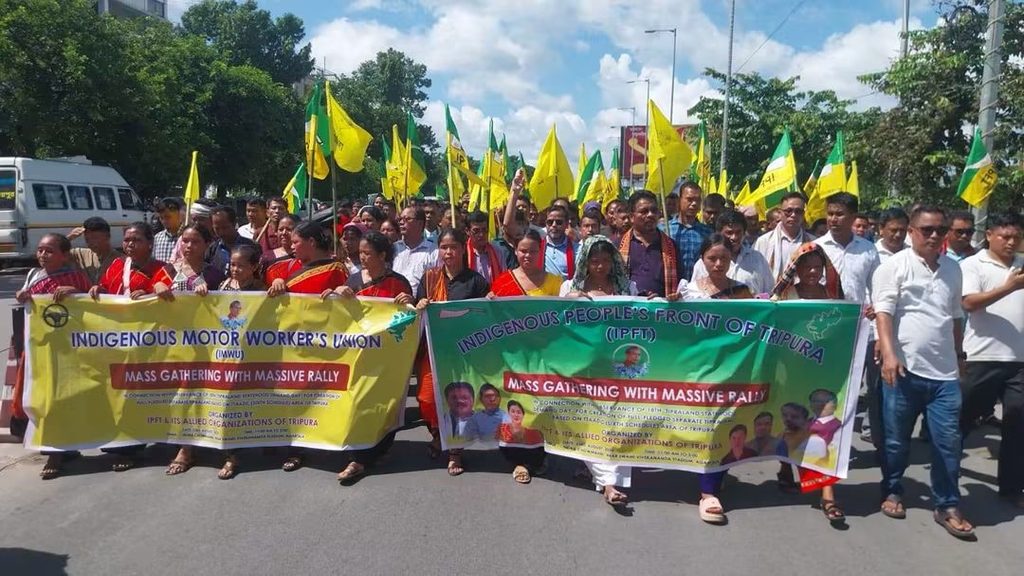
The IPFT has been observing August 23 as its Statehood Demand Day as part of its continuing political campaign for Tipraland. The party has maintained that the demand should be pursued through constitutional and democratic means.
Speaking at the programme, IPFT leaders reiterated that the demand remains an important part of the party’s political ideology. The party has argued that the creation of a separate state would provide stronger constitutional and political safeguards for the indigenous people of Tripura, particularly in matters concerning identity, land, culture, political representation and self-governance.
The demand is being pursued by the IPFT under Articles 2 and 3 of the Constitution of India, which provide the constitutional framework for the establishment of new states and alteration of the areas, boundaries or names of existing states.
A demand the IPFT says it will not abandon
The latest mobilisation also carries significance because the IPFT is a constituent of the BJP-led government in Tripura. Despite being part of the ruling alliance, the party has continued to publicly maintain its position on Tipraland.
The participation of Minister Shukla Charan Noatia in the programme therefore underlined the IPFT’s attempt to maintain its separate political identity while remaining part of the governing coalition.
The party’s leadership has repeatedly maintained that its participation in government does not mean that it has abandoned its ideological position on statehood.
The IPFT’s demand differs from the Greater Tipraland proposal associated with Tipra Motha. The IPFT has traditionally sought a separate state covering the TTAADC areas, whereas the Greater Tipraland concept has sought a wider arrangement involving indigenous Tripuri populations and areas beyond the existing autonomous council.
Keeping the Tipraland issue alive
For the IPFT, Statehood Demand Day is more than an annual political gathering. It provides the party with an opportunity to remind its supporters and the wider public that the Tipraland question remains unresolved.
The party’s statehood campaign has its roots in the political movement led by its founding leadership, including late N.C. Debbarma, under whose leadership the IPFT revived the Tipraland demand as a central political issue. The party has continued to observe August 23 as Statehood Demand Day.
Sunday’s programme in Agartala therefore served both an ideological and organisational purpose. At a time when indigenous politics in Tripura has undergone significant changes, the IPFT sought to demonstrate that the Tipraland demand continues to have a place in the state’s political landscape.
A complicated political landscape
The renewed demand also comes against the backdrop of changing political equations among Tripura’s indigenous parties.
The rise of Tipra Motha in recent years has altered the political landscape in the tribal areas, while the IPFT has continued to remain part of the BJP-led alliance. Against this backdrop, maintaining the Tipraland issue allows the IPFT to retain a distinct political position on the question of indigenous rights and statehood.
The latest rally, therefore, cannot be viewed only as an annual observance. It also reflects the party’s effort to retain its political relevance and reconnect with its traditional support base.
For supporters of the demand, Tipraland remains closely connected with questions of indigenous identity, land rights, cultural preservation and political empowerment. For opponents and other political groups, however, the proposal raises broader questions about the territorial and administrative future of Tripura.
The demand remains on the political agenda
The August 23 programme has once again demonstrated that the demand for Tipraland has not disappeared from Tripura’s political discourse.
With Prem Kumar Reang and Shukla Charan Noatia at the forefront of the latest programme, the IPFT has reiterated that its participation in government has not altered its fundamental position on statehood.
Whether the demand can eventually secure wider political and constitutional acceptance remains a matter for the future. But the message from the IPFT’s Statehood Demand Day programme is clear: the party intends to keep the Tipraland demand alive and continue pursuing it through constitutional and democratic means.