

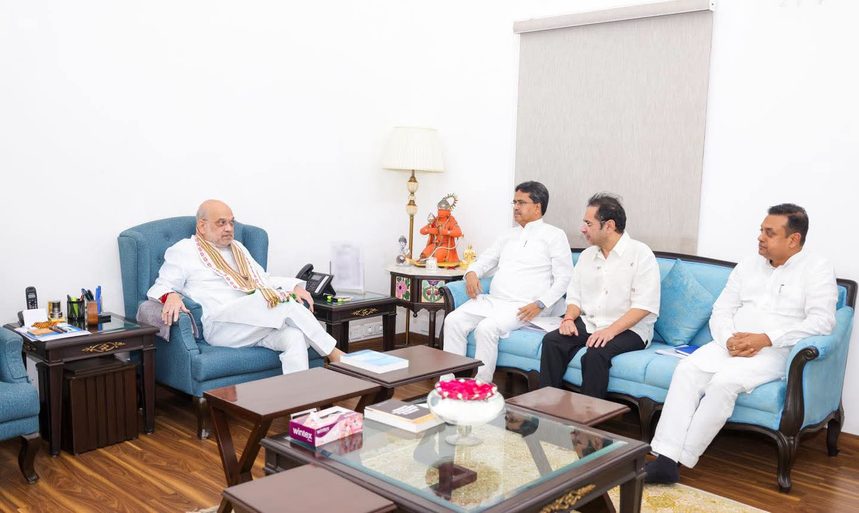
After Amit Shah–Manik Saha–Pradyot Debbarma meeting, CM announces three-party electoral understanding; Tripartite Accord implementation becomes key political commitment
Agartala, September 5, 2026: A dramatic new political equation has emerged in Tripura ahead of the upcoming TTAADC Village Committee elections, following a high-level meeting in New Delhi between Union Home Minister Amit Shah, Chief Minister Dr. Manik Saha and TIPRA Motha founder Maharaja Pradyot Kishore Manikya Debbarma.
The meeting, held at Amit Shah’s residence on Friday, September 4, was also attended by BJP Northeast Coordinator Sambit Patra. Discussions centred on the political and constitutional interests of Tripura’s indigenous people, implementation of the Tripartite Accord, and the upcoming Village Committee elections.
The significance of the Delhi meeting became clear within 24 hours.
After returning to Tripura, Chief Minister Dr. Manik Saha announced that the BJP, TIPRA Motha and IPFT would jointly contest the upcoming Village Committee elections.
The announcement effectively ends speculation over whether the three parties would fight separately in the tribal areas and marks a major shift in Tripura’s political landscape.
Delhi Meeting: Accord at the Centre of the Discussions
The September 4 meeting came at a politically crucial moment.
TIPRA Motha had been pressing for concrete progress on the implementation of the Tripartite Accord signed in 2024 between the Government of India, the Government of Tripura and TIPRA Motha. The implementation of the accord, particularly issues concerning indigenous land rights and constitutional safeguards, had become an important point in discussions over an electoral understanding with the BJP.
Reports citing sources indicate that the Delhi discussions included assurances regarding a phased implementation of the accord, including measures relating to land rights. However, these details have so far emerged through reports and sources rather than a publicly released detailed government document.
The meeting therefore carried significance far beyond an ordinary election strategy discussion.
It brought together the Union Home Minister, Tripura’s Chief Minister and the founder of the state’s most influential tribal political force at a time when the future direction of tribal politics was being negotiated.
From Differences to a Common Electoral Platform
For months, questions had surrounded the possibility of a BJP–TIPRA Motha understanding for the Village Committee elections.
Those questions have now been answered.
Dr. Manik Saha said the BJP, TIPRA Motha and IPFT would contest the elections together, with seat-sharing to be finalised.
The development is particularly important because TIPRA Motha and BJP have had differences over several tribal issues despite being partners in the state government.
The new arrangement now brings three political forces under one electoral umbrella—the BJP’s organisational machinery, TIPRA Motha’s strong presence among indigenous voters and IPFT’s position as another BJP ally with a tribal political base.
Why the Tripartite Accord Matters
For TIPRA Motha, the political understanding cannot be viewed separately from the question of the Tripartite Accord.
The agreement has been presented by the party as a framework for addressing the political, social, cultural, economic and constitutional concerns of Tripura’s indigenous population.
The Delhi meeting therefore assumed particular importance because implementation of the accord and the Village Committee alliance were discussed at the same political table.
Chief Minister Saha has now said that the issues connected with the accord will be addressed in a time-bound manner after the elections.
That commitment could become one of the most closely watched political developments in Tripura over the coming months.
A Crucial Election After a Decade
The political stakes are high.
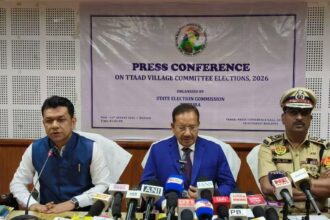
Elections to 587 Village Committees under the TTAADC are scheduled for September 28, with 4,597 seats at stake. Counting is scheduled for October 5. The elections are particularly significant because Village Committee polls have not been held for around a decade.
For TIPRA Motha, the election will test whether its strong support in the TTAADC can be converted into influence at the grassroots level.
For the BJP, the alliance provides an opportunity to work with its tribal partners rather than divide the anti-opposition vote.
For IPFT, the arrangement offers a chance to remain an important component of the broader NDA political structure in Tripura.
More Than an Election Alliance?
The real significance of the new arrangement may extend beyond September 28.
The BJP, TIPRA Motha and IPFT are now preparing to fight a major grassroots election together. If the alliance performs strongly, it could create a new template for political cooperation in Tripura’s tribal areas.
But the partnership will also be tested by expectations surrounding the Tripartite Accord.
For TIPRA Motha supporters, the crucial question will be whether the assurances emerging from Delhi translate into visible action on the ground.
For the BJP, the challenge will be maintaining unity among three parties with different political histories, organisational structures and voter bases.
And for the indigenous population, the focus will ultimately be on whether the political understanding produces tangible progress on the issues that have remained at the heart of Tripura’s tribal politics.
A New Chapter in Tripura Politics
The sequence of events is striking.
September 4: Amit Shah meets Dr. Manik Saha, Pradyot Kishore Manikya Debbarma and Sambit Patra in New Delhi.
September 5: Chief Minister Dr. Manik Saha returns to Tripura and publicly announces the BJP–TIPRA Motha–IPFT electoral understanding.
Between these two events lies a larger political message: the differences have given way, at least for the Village Committee elections, to a common political platform.
The September 28 polls will now be more than a contest for thousands of Village Committee seats.
They will be a test of whether three political forces can turn a Delhi understanding into grassroots unity—and whether the promises surrounding the Tripartite Accord can begin translating into action.
For Tripura’s tribal politics, a new chapter may have just begun.