





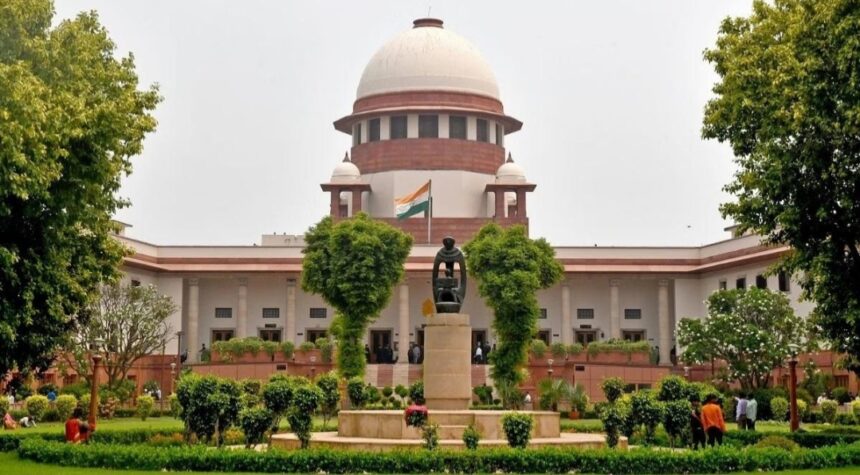
New Delhi, October 19, 2026: The Supreme Court of India has held that access to and use of the internet is a fundamental right for every individual, including children, and cautioned against imposing blanket restrictions on minors in the name of online safety.
In its order dated October 15, a bench comprising Justices J.B. Pardiwala and K. Vinod Chandran held that the right to access and use the internet falls under Article 21, which protects the right to life and personal liberty, read with Article 19(1)(a), which guarantees freedom of speech and expression.
The ruling came while the court was considering measures to address the circulation of child sexual exploitation and abuse material (CSEAM) on social media platforms and other online services.
Court Emphasises Balance Between Internet Access and Child Safety
The Supreme Court observed that the internet has become an important source of education, information, communication and creative expression. For children living in remote areas and those with special needs, online platforms can provide essential opportunities for learning and social interaction.
The bench cautioned that completely denying children access to the internet would not necessarily protect them from online harm. Instead, blanket restrictions could push children towards unregulated platforms and discourage those experiencing online threats or abuse from seeking help from parents, guardians or trusted adults.
The court stressed that children’s safety and their freedom to access information should not be treated as opposing interests.
Supreme Court Suggests Stronger Online Safeguards
While rejecting blanket restrictions, the court acknowledged that appropriate safeguards are necessary to protect children in the digital environment.
The bench suggested measures such as dedicated child-friendly modes on social media platforms, private accounts by default, restrictions on messages and contact from unknown adults, and stronger moderation of advertisements and content accessible to minors.
It also highlighted the importance of parental guidance, consent and supervision, along with digital awareness programmes to help children recognise online risks and report abusive behaviour.
The court clarified that its observations do not prevent the government from restricting children’s access to specific categories of content or services that are inherently harmful to them, including adult-content websites.
Centre Asked to Strengthen Measures Against Online Child Abuse Material
The Supreme Court also issued directions aimed at strengthening the detection and removal of child sexual exploitation and abuse material from digital platforms.
The directions include establishing a comprehensive national database to help identify such material and facilitate its removal across online services. The court also sought information about technological measures used by intermediaries to detect and remove the material.
The case highlights the challenges faced by authorities in balancing constitutional freedoms, children’s privacy and the need for effective online protection.
What the Ruling Means
The ruling reinforces the importance of digital access in modern life while making clear that protecting children requires proportionate and effective safeguards rather than simply denying them access to the internet.
For parents, schools, online platforms and policymakers, the decision underscores the need for greater digital awareness, responsible platform practices and stronger mechanisms to address online exploitation and abuse.
The Supreme Court’s observations do not mean that children have unrestricted access to every website or online service. Age-appropriate protections and restrictions on inherently harmful content may still be implemented within the framework outlined by the court.