






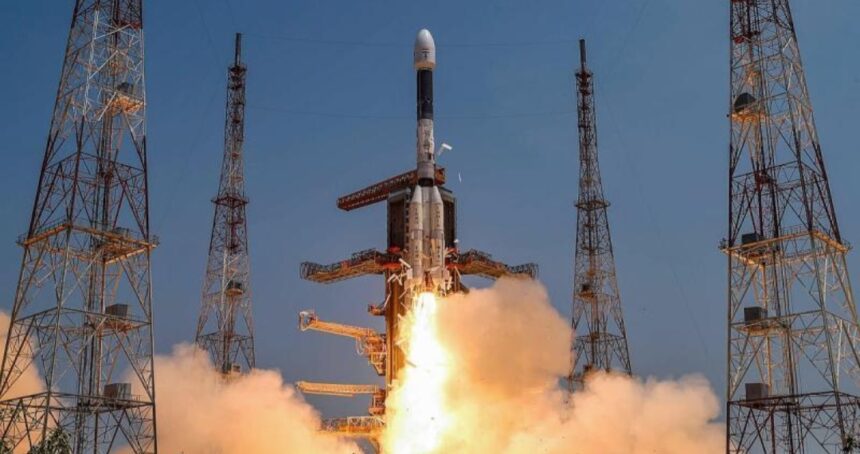
SRIHARIKOTA, October 31: The Indian Space Research Organisation (ISRO) has successfully launched its next-generation navigation satellite, NVS-03, aboard the GSLV-F18 rocket, marking a significant step towards strengthening India’s independent satellite navigation capabilities.
The rocket lifted off at 11:51 PM on Friday, October 30, from the Second Launch Pad of the Satish Dhawan Space Centre in Sriharikota, Andhra Pradesh.
Following approximately 18 minutes of flight, the GSLV-F18 successfully injected the 2,232-kg satellite into its designated Geosynchronous Transfer Orbit (GTO). The mission marked the 20th flight of India’s Geosynchronous Satellite Launch Vehicle (GSLV).
NVS-03 is the third satellite in ISRO’s second-generation navigation satellite series. It is designed to ensure continuity and improve the availability of services under the Navigation with Indian Constellation (NavIC), India’s indigenous regional navigation system.
Boost to India’s Own Navigation System
The successful deployment of NVS-03 has restored NavIC to its minimum operational configuration of four satellites, strengthening India’s independent Positioning, Navigation and Timing (PNT) capabilities.
The satellite carries an indigenous atomic clock alongside procured atomic clocks. It also introduces the L1 frequency band in addition to the existing L5 and S-band signals, expanding the system’s potential applications.
NavIC provides regional navigation coverage across India’s landmass and an area extending approximately 1,500 kilometres beyond the country’s boundaries.
The system supports applications such as vehicle tracking, railway operations, maritime navigation and other civilian, commercial and strategic services.
ISRO Chairman Congratulates Mission Team
Following the successful launch, ISRO Chairman Dr V. Narayanan congratulated the scientists, engineers, industrial partners and academic institutions involved in the mission.
He highlighted that the GSLV-F18/NVS-03 mission was accomplished with a turnaround time of just 56 days between two successive GSLV launches, marking a significant operational achievement for the space agency.
The successful mission represents another milestone in India’s efforts to strengthen its indigenous space technology and reduce dependence on foreign satellite navigation systems.