

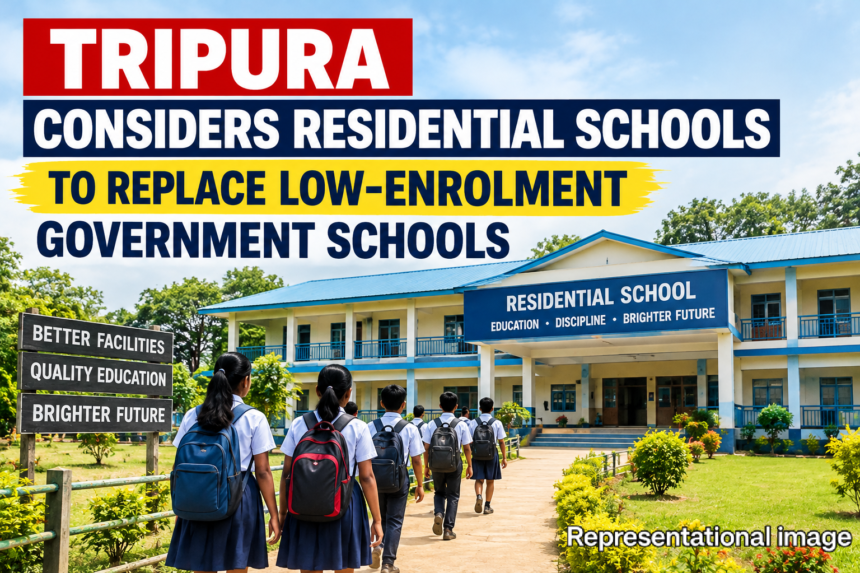
Agartala: The Tripura government is considering closing government schools with very low or zero student enrolment and replacing them with residential educational institutions, particularly in remote areas where children face difficulties accessing schooling.
Chief Minister Dr Manik Saha disclosed the proposal while speaking to reporters during a programme in Unakoti district. The initiative is being examined especially for areas under the Tripura Tribal Areas Autonomous District Council (TTAADC), where access to educational facilities can be challenging.
The proposal aims to provide students with access to better educational facilities by establishing residential schools in suitable locations. The government is examining the possibility of restructuring existing institutions where teachers are available but student enrolment remains negligible.
12 Eklavya Model Residential Schools Already Operational
According to the Chief Minister, 12 Eklavya Model Residential Schools in the state are already operational, while another six are expected to begin functioning soon. The remaining institutions are planned to be taken up in phases.
Eklavya Model Residential Schools are designed to provide education and residential facilities to students, particularly from tribal communities. The government is exploring whether a similar residential-school approach could help children in remote areas who struggle to reach existing educational institutions.
Focus on Students in Remote Areas
Dr Manik Saha said some schools in ADC areas have very few or no students despite having teachers. The government is considering whether such institutions could be replaced by residential schools located where they would better serve children who face difficulties accessing education.
The proposal is still under consideration, and the government has begun preliminary work towards examining its implementation. No final statewide school-closure order or confirmed implementation schedule was identified in the reports reviewed.
Implementation and Student Welfare Remain Key
If implemented, the proposal could change how educational facilities are organised in remote parts of Tripura. However, its success will depend on adequate hostel facilities, qualified teachers, student safety, food and healthcare arrangements, and safeguards to ensure that children are not deprived of education during the transition.
Authorities will also need to consider the concerns of parents and local communities, particularly where younger children may face difficulties staying away from their families.
The government’s next steps will determine how the proposal develops and whether residential schooling becomes a wider alternative for areas affected by persistently low enrolment.