






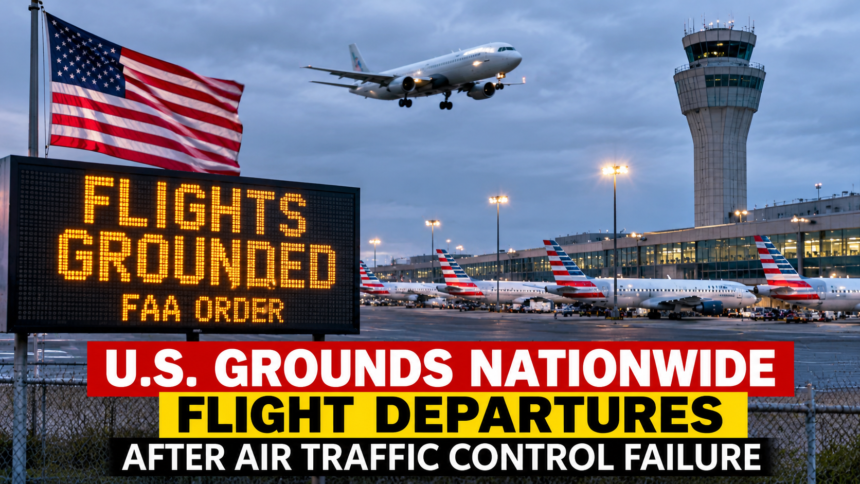
The United States experienced a rare nationwide aviation shutdown on Friday, November 13, after a major communication failure disrupted air traffic control operations across the country, prompting the Federal Aviation Administration (FAA) to temporarily halt departing flights.
The FAA issued the nationwide ground stop at approximately 3:54 PM Eastern Time, citing extraordinary circumstances and safety concerns. The disruption affected 22 regional air route traffic control centres responsible for managing aircraft travelling between airports across the country.
While departing flights were grounded, aircraft already in the air were allowed to continue flying and land safely. Some international flights were also handled on a case-by-case basis.
The disruption caused widespread travel chaos, with approximately 10,500 flights delayed and more than 1,900 cancelled, according to flight-tracking data reported during the incident.
US Transportation Secretary Sean Duffy pointed to ageing air traffic control infrastructure, including outdated communication equipment and overloaded systems, as key concerns. Homeland Security Secretary Markwayne Mullin said there was no indication of a cyberattack, although the cause of the technical failure remained under investigation.
The FAA subsequently lifted the nationwide ground stop at approximately 8:15 PM Eastern Time, allowing departing flights to resume. However, airlines continued to face operational disruptions as aircraft and flight crews had to be repositioned.
The incident marked the second nationwide aviation shutdown in the United States since the September 11, 2001 terrorist attacks. A similar disruption occurred in January 2023 when a technical failure in the FAA’s NOTAM notification system temporarily halted departures across the country.
The latest incident has once again raised concerns over the reliability of America’s ageing air traffic control infrastructure and the need for technological modernisation.