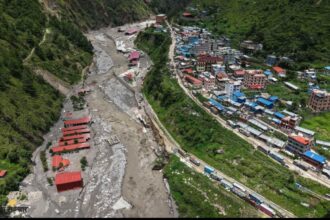






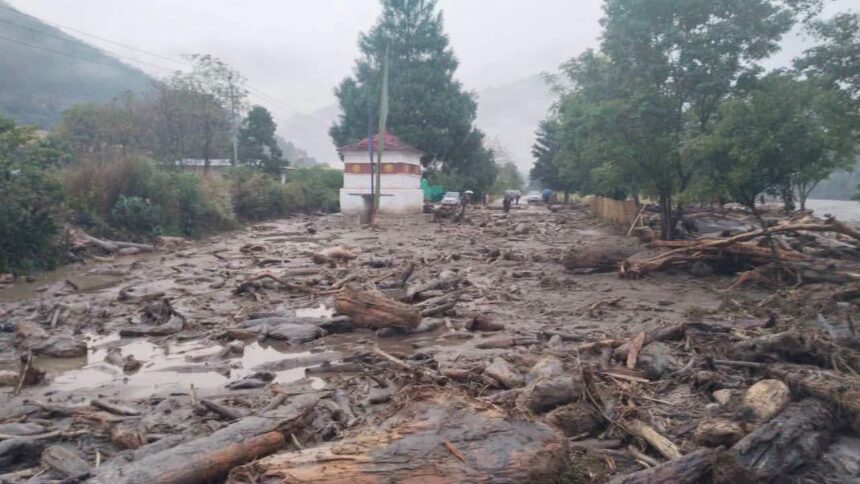
A sudden release of water from Shintaphu Lake in northwestern Bhutan has caused extensive damage to infrastructure, disrupted irrigation facilities and raised concerns over possible flooding in downstream areas of India.
A glacial lake outburst flood (GLOF) in Bhutan’s Gasa district has triggered flash flood warnings in parts of Assam and West Bengal, following a sudden release of water from Shintaphu Lake on Thursday evening, October 29.
The incident has caused significant damage in the mountainous region, including the destruction of facilities at Gasa Tshachu, a popular natural hot spring located along the Mo Chhu River.
According to reports, no loss of life has been reported at Gasa Tshachu, as the area had been evacuated before the floodwaters arrived.
Gasa Tshachu Facilities Completely Washed Away
The powerful floodwaters washed away the facilities at Gasa Tshachu, severely affecting the popular tourist destination.
Bhutan’s state broadcaster BBS reported that the full extent of the damage could not immediately be assessed because of darkness and the strong flow of water. Two portable Bailey bridges were also feared to have been swept away.
Bhutan’s national newspaper Kuensel reported that a section of the road leading towards Laya village had been washed away, leaving the route impassable. Traffic on the affected road has reportedly been suspended indefinitely.
Gasa Tshachu had previously suffered major damage during a flash flood on August 26, 2021, when the swollen Mo Chhu River changed its course towards the hot spring.
Solar Irrigation Project Damaged in Punakha
The flash flood has also partially damaged the Solar Irrigation Lifting System in the Dochhukha-Dzomlingthang-Ritsa Chiwog area under Guma Gewog in Punakha.
The solar-powered irrigation facility was installed earlier this year to address irrigation difficulties faced by local residents.
According to a local representative, the system has stopped functioning following the incident. The complete extent of the damage is yet to be assessed.
Meanwhile, debris carried by the floodwaters has covered a section of the Punakha-Gasa Highway in the Dzomlingthang area, affecting road connectivity.
Assam and West Bengal on Flood Alert
The impact of the Bhutan flood has raised concerns across downstream areas of India, particularly along the Sankosh River system.
Authorities have issued precautionary alerts in vulnerable areas of Assam and West Bengal, with residents living close to riverbanks advised to remain vigilant and move to safer locations where necessary.
In Assam, Dhubri district has been identified among the areas requiring attention. In West Bengal, the Darjeeling hills, Alipurduar and Jalpaiguri districts are among the areas facing potential flood risks.
Residents along the Sankosh River in Cooch Behar have also been cautioned.
The Sankosh originates in Bhutan and receives water from major river systems, including the Mo Chhu and Pho Chhu, before eventually joining the Brahmaputra in Assam.
West Bengal authorities have appealed to people living in vulnerable riverside areas to follow administrative instructions and avoid unnecessary risks.
Why Shintaphu Lake Is a Concern
Shintaphu Lake, also known as Shintaphu Tsho, is located in Bhutan’s Gasa district, below Wakila Mountain. It lies in the upper reaches of the Mo Chhu river basin and is among Bhutan’s 17 glacial lakes identified as potentially dangerous.
A Glacial Lake Outburst Flood (GLOF) occurs when a large volume of water stored in a glacial lake is suddenly released, potentially following the failure of a natural dam.
Such events can send powerful surges of water and debris through mountain valleys, threatening roads, bridges, settlements and agricultural infrastructure downstream.
The immediate concern remains the impact of the flood on communities and infrastructure along the river systems flowing from Bhutan into India.